


FILTRATION SYSTEMS
What is the purpose of a filtration system?
The main types of filtration systems are:
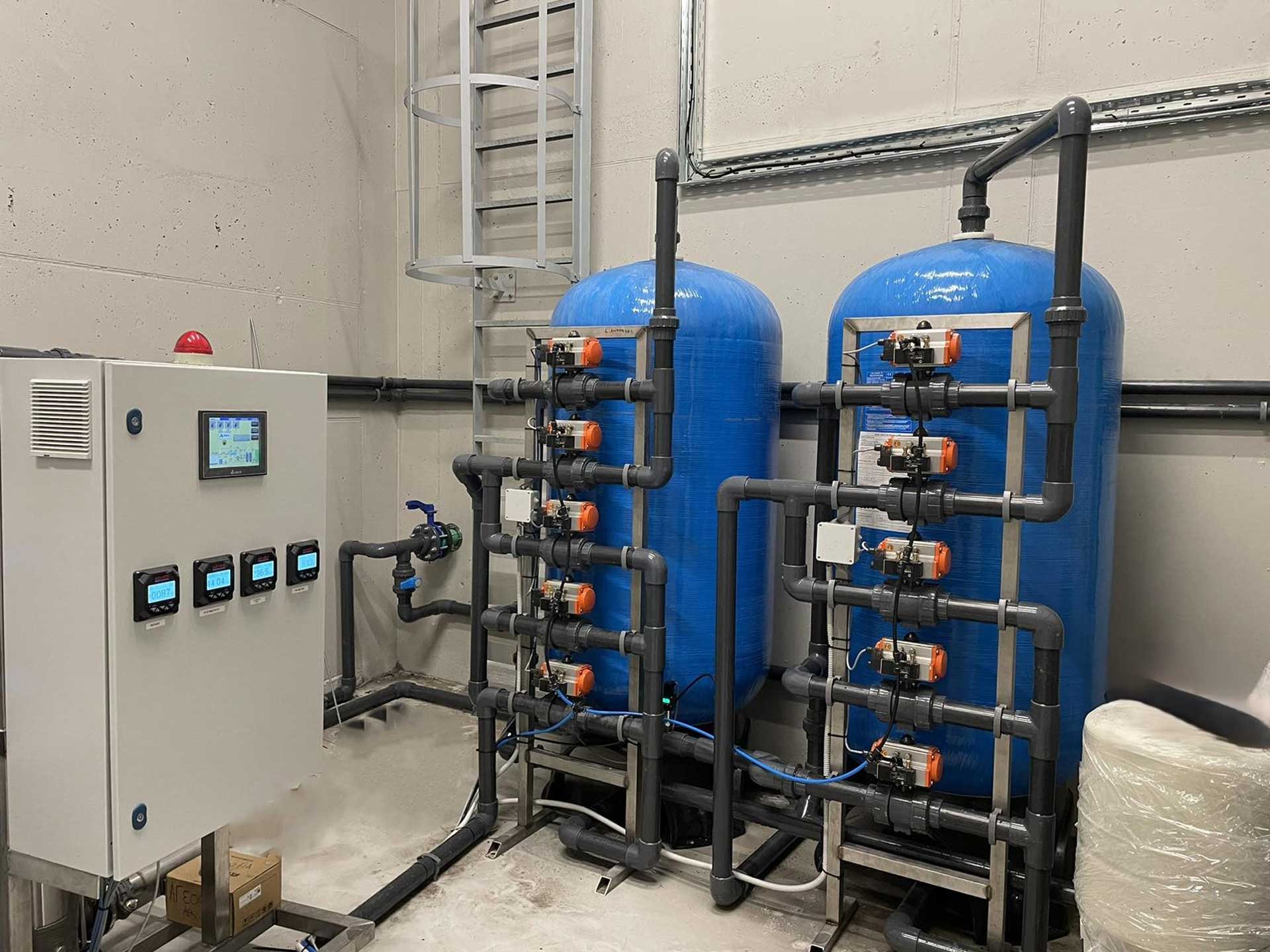
The Sand Filter is used for the retention of suspended solids in water and is manufactured in accordance with the specifications required for equipment used in the food industry.
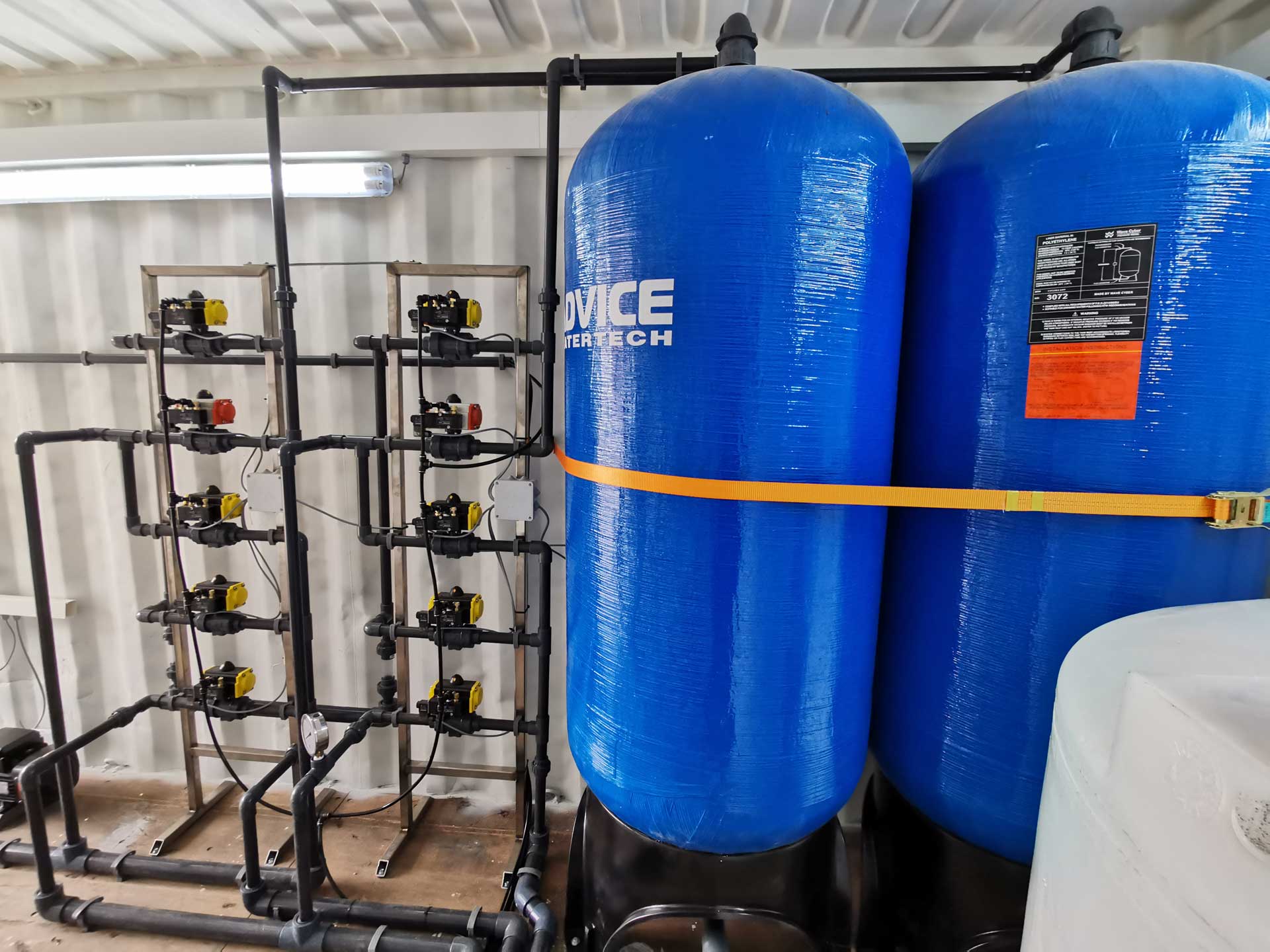
A sand filter consists of the pressure vessel, filter media, and diffusers.
The pressure vessel may be constructed either from polyethylene (PE) reinforced with fiberglass and epoxy resin, or from metal, depending on the required flow rate and filtration needs.
Filtration is carried out using layers of quartz sand and quartz gravel of varying grain sizes, which are successively layered inside the filter. According to literature, this setup can achieve filtration quality of up to 25 microns. The specific filtration materials used in the media layers are highly durable—resistant to abrasion and time—and do not affect the water's color, taste, or odor. The quantity of media used is determined by the system's flow rate.
The operation of a sand filter can be manual or fully automatic. It is designed based on the optimal filtration velocity and includes a 40% free space in the tank to ensure effective backwashing of the system.
Advice provides a fully automated operation and backwashing system, which includes either a filter head for smaller pressure vessels or a five-valve configuration for larger vessels. These valves are controlled by a PLC (Programmable Logic Controller) integrated into the system’s control panel.
The Iron and Manganese Removal Filter is designed to address the issue of elevated concentrations of iron and manganese in water—two metals considered toxic to human health. One of the advantages of this type of filter is its selective operation, meaning it removes only these specific elements while leaving other water constituents unaffected.
This filter can be easily integrated into any professional or industrial application and is capable of capturing large quantities of iron and manganese compounds. It is designed with an optimal filtration velocity and includes 40% free space in the vessel to enable effective and unobstructed backwashing of the system.
The Iron and Manganese Removal Filter consists of a pressure vessel, filter media, and an upper and lower water distribution system.
The pressure vessel may be constructed from polyethylene (PE) reinforced with fiberglass and epoxy resin, or from metal, depending on the system’s flow rate and filtration requirements.
Filtration is achieved using quartz gravel, quartz sand, and pyrolusite of varying grain sizes, which are layered inside the filter. The filter media used in the various filtration layers are highly resistant to abrasion and time, and they do not alter the water’s color, taste, or odor. The required quantity of media is determined by the system’s flow capacity.
The operation of an Iron and Manganese Removal Filter can be manual or fully automatic. Advice offers an automated operation and backwashing system, which includes either a filter head for smaller vessels or a five-valve setup for larger tanks. These valves are controlled by a PLC (Programmable Logic Controller) integrated into the system’s electrical control panel.
Activated carbon is a completely natural product that appears as a fine, odorless, tasteless, and non-toxic black powder. Its primary function is to remove chlorine and eliminate the unpleasant taste and odor often found in municipal water. Additionally, the Activated Carbon Filter significantly contributes to water filtration by capturing and removing organic substances and suspended solids in any residential, commercial, or industrial installation.
It is designed based on the recommended filtration velocity and includes 40% free space to ensure effective and unobstructed backwashing of the system.
The Activated Carbon Filter consists of the pressure vessel, filter media, and distribution systems.
The pressure vessel can be made of polyethylene (PE) reinforced with fiberglass and epoxy resin, or metal construction, depending on the required flow rate and filtration needs.
For the filtration process, powdered activated carbon is used. This material is highly resistant to both abrasion and aging, and the quantity used is determined based on the system's flow requirements.
The operation of the Activated Carbon Filter can be manual or fully automated. Advice provides an automated control and backwash system, which includes either a filtration head for smaller pressure vessels or a five-valve assembly for larger ones. These valves are managed by a PLC (Programmable Logic Controller) located in the system’s electrical control panel.
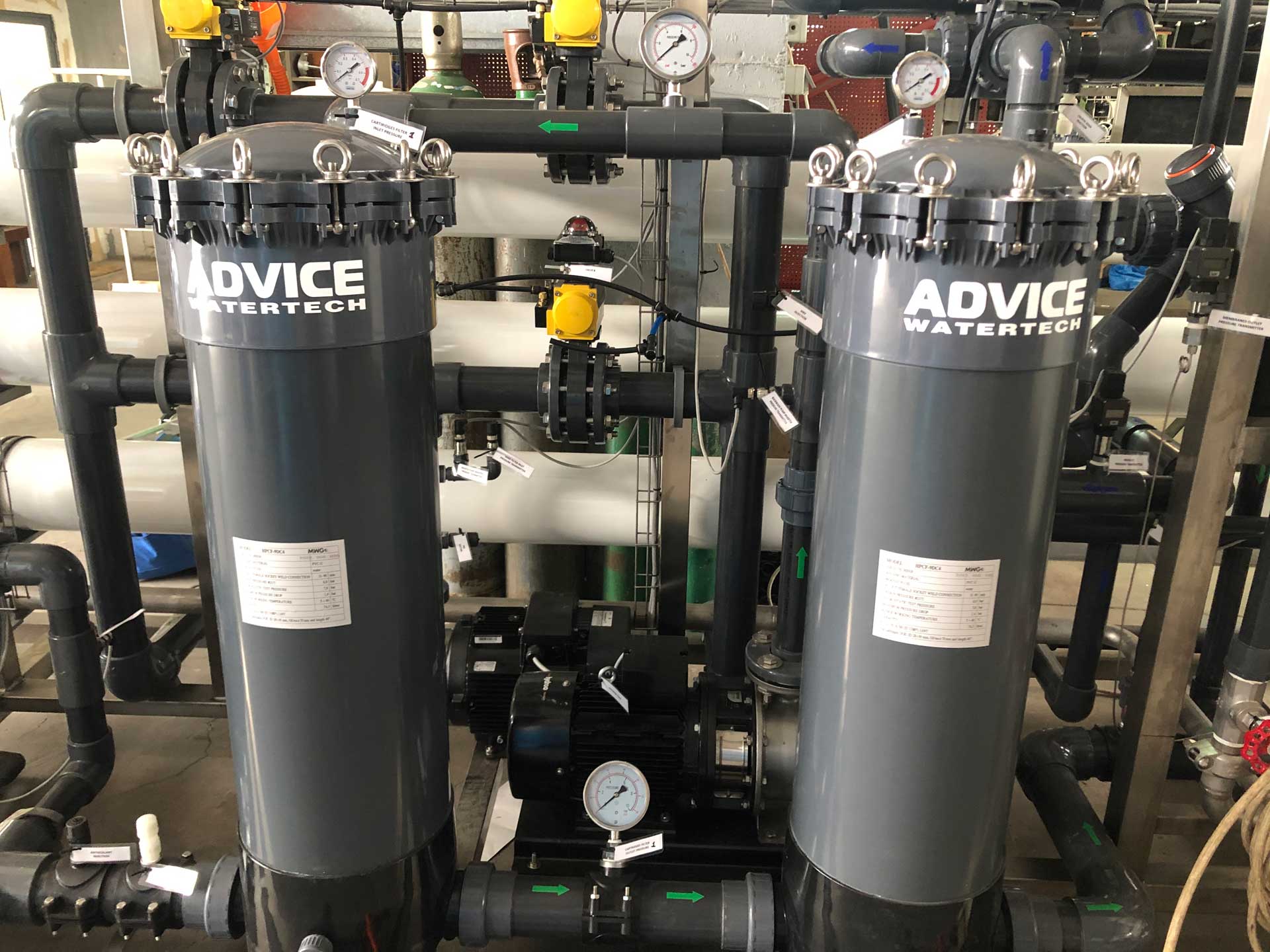
Cartridge and bag filters are used for water filtration and the removal of suspended solids and other pollutants. The filtered water becomes suitable for use or further treatment, free from unwanted suspended particles.
A cartridge filter consists of a plastic or metal housing that contains various types of filter cartridges depending on the application. Available cartridges include polypropylene (PP) elements with different micron ratings (25μm, 20μm, 5μm, 1μm), ideal for filtering suspended particles such as dirt, sand, and rust.
Specifically, for the removal of chlorine, organic compounds, and unpleasant taste or odor, activated carbon cartridges are available in granular or block form.
In our warehouse, we maintain ready-to-ship stock of all types of cartridge and bag filters, with lengths ranging from 10" to 40", and filtration grades from 1 to 25 microns.
For more information on available filters and replacement cartridges, feel free to [read more here].
Are you looking for water filtration systems using any of the above methods?
Advice undertakes the design and construction of complete, custom-made filtration systems tailored to your specific requirements.
To determine the most suitable filtration solution for your case, don’t hesitate to contact our technical team.